728x90
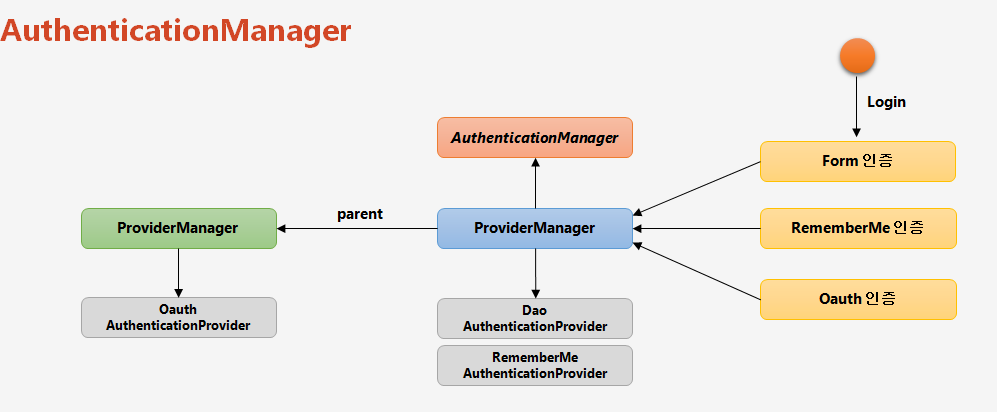
- AuthenticationProvider 목록 중에서 인증 처리 요건에 맞는 AuthenticationProvider를 찾아 인증처리를 위임한다
- 실제 인증은 하지 않는다(위임만 한다)
- 부모 ProviderManager를 설정하여 AuthenticationProvider를 계속 탐색할 수 있다
- ProviderManager가 인증에 맞는 Provider를 찾아 인증처리를 위임한다.
- 만약 찾을 수 있는 Provider가 없을 경우 parent속성의 ProviderManager를 탐색하여, Provider를 찾는다.
-
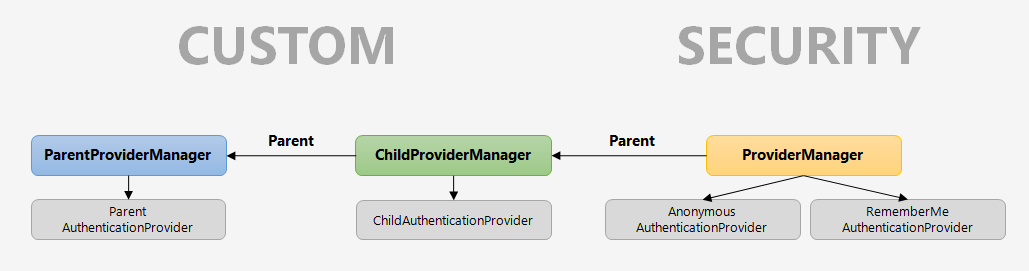
Linked 형태로 부모와 자식 간의 관계를 형성할 수 있다
-
자식에서 적절한 AuthenticationProvider를 찾지 못할 경우 계속 부모로 탐색하여 찾는 과정을 반복한다
-
AuthenticationManagerBuilder를 사용해서 스프링 시큐리티의 초기화 과정에서 설정한 기본 Parent 관계를 변경해야 권한 필터에서 재 인증 시 모든 AuthenticationProvider를 탐색할 수 있다

AuthenticationManagerBuilder.performBuild를 통해 ProviderManager를 생성한다.. -
@Override public Authentication authenticate(Authentication authentication) throws AuthenticationException { Class<? extends Authentication> toTest = authentication.getClass(); AuthenticationException lastException = null; AuthenticationException parentException = null; Authentication result = null; Authentication parentResult = null; int currentPosition = 0; int size = this.providers.size(); for (AuthenticationProvider provider : getProviders()) { if (!provider.supports(toTest)) { continue; } if (logger.isTraceEnabled()) { logger.trace(LogMessage.format("Authenticating request with %s (%d/%d)", provider.getClass().getSimpleName(), ++currentPosition, size)); } try { result = provider.authenticate(authentication); if (result != null) { copyDetails(authentication, result); break; } } catch (AccountStatusException | InternalAuthenticationServiceException ex) { prepareException(ex, authentication); // SEC-546: Avoid polling additional providers if auth failure is due to // invalid account status throw ex; } catch (AuthenticationException ex) { lastException = ex; } } if (result == null && this.parent != null) { // Allow the parent to try. try { parentResult = this.parent.authenticate(authentication); result = parentResult; } catch (ProviderNotFoundException ex) { // ignore as we will throw below if no other exception occurred prior to // calling parent and the parent // may throw ProviderNotFound even though a provider in the child already // handled the request } catch (AuthenticationException ex) { parentException = ex; lastException = ex; } } if (result != null) { if (this.eraseCredentialsAfterAuthentication && (result instanceof CredentialsContainer)) { // Authentication is complete. Remove credentials and other secret data // from authentication ((CredentialsContainer) result).eraseCredentials(); } // If the parent AuthenticationManager was attempted and successful then it // will publish an AuthenticationSuccessEvent // This check prevents a duplicate AuthenticationSuccessEvent if the parent // AuthenticationManager already published it if (parentResult == null) { this.eventPublisher.publishAuthenticationSuccess(result); } return result; } // Parent was null, or didn't authenticate (or throw an exception). if (lastException == null) { lastException = new ProviderNotFoundException(this.messages.getMessage("ProviderManager.providerNotFound", new Object[] { toTest.getName() }, "No AuthenticationProvider found for {0}")); } // If the parent AuthenticationManager was attempted and failed then it will // publish an AbstractAuthenticationFailureEvent // This check prevents a duplicate AbstractAuthenticationFailureEvent if the // parent AuthenticationManager already published it if (parentException == null) { prepareException(lastException, authentication); } throw lastException; }- ProviderManager
728x90